- Company overview The heart of SMC Vision & Philsophy Partnership Certifications Company culture
- Our service Design and Engineering Maintenance and Service Examine Production Line Upgrade and Transformation Storage and Logistics Processing, Trading and Distributor
- Management Our history Global responsibility Info Center
- Procurement center Internship
- Metal Steel Products Stainless Steel Products Aluminum Products Copper Products Galvanized Steel and PPGI Special Alloy Building Material
- Containers ISO Standard Container Equipment Container Storage Container Tank Container Container Fittings Container Trailer Refrigerated/Reefer Container Offshore Container Container House
- Gas Cylinder & Fire Extinguisher Cryogenic Liquid Cylinder Oxygen Gas Cylinder Storage Tank CNG Gas Cylinder LPG Gas Cylinder Hydrogen Gas Cylinder Nitrogen Gas Cylinder Industry Gas Cylinder Fire Extinguisher
- Metal Machinery Motor Forming Machine Cutting Machine Processing Machine Bending Machine Block Machine Spare Parts Other Machinery
- Mechanical Products Conveyor Belt Miscellany Mooring Equipment Laser Equipment Bearing Marine Equipment Vehicle Industry Pressure Vessel
- Electrical System Transformer Production Line Lighting System Power Distribution Automation Electrical Cable Solar Power System Electric Protection System
- Project Plastic Pipes and Pipe Fittings Fiberglass Reinforced Plastic Pontoon System
Types of International Standard Containers
Shanghai Metal Corporation is a leading ISO container manufacturer and supplier.
A container is a versatile tool that can be used for various transportation needs and is easy to handle. The greatest success of a container lies in the standardization of its products and the entire transportation system.
A dry cargo container, also known as a general-purpose container, has a wide range of applications. Except for goods requiring refrigeration or insulation and a few special goods (such as liquids, livestock, and plants), any goods suitable for container transport in terms of size and weight can be transported using a dry cargo container. Structurally, dry cargo containers can be divided into three categories: one-end opening, two-end opening, and side-door opening. All doors of dry cargo containers are watertight and can be opened 270 degrees.
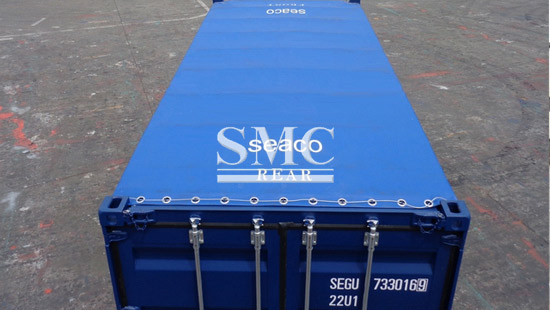
This is a special type of general-purpose container. Except for the removable top, its structure is similar to a standard container. Open-top containers are further divided into "hard-top" and "soft-top" types. A "hard-top" container has a roof made from a single piece of steel; a "soft-top" container has a roof made of canvas or plastic sheeting, supported by detachable extension beams.
Open-top containers are mainly suitable for loading large and heavy cargo, such as steel, timber, and glass. Cargo can be lifted into the container from the top using a crane, which reduces the risk of damage, decreases the labor intensity of loading, and facilitates securing the cargo inside the container.
3) Platform Based Container
Platform based containers have a thicker bottom, making them stronger than standard containers, while their internal height is lower. To secure the loaded cargo, tie-down rings are installed on the lower side beams and corner posts. To prevent cargo collapse during transport, pillars or fences are also installed on both sides of the container. Platform based containers are not watertight and cannot be used to transport moisture-sensitive goods. During land transport or storage in a yard, the cargo should be covered with tarpaulins to prevent it from getting wet. Platform containers are suitable for loading long and heavy cargo, such as heavy machinery, steel, steel pipes, timber, steel ingots, machine tools, and various equipment. Two or more platform containers can also be joined together to form a loading platform for loading extra-large cargo.
Platform containers refer to containers without a superstructure, only a bottom structure. Platform containers are further divided into those with top and bottom corner fittings and those with only bottom corner fittings. Platform containers are widely used in Europe.
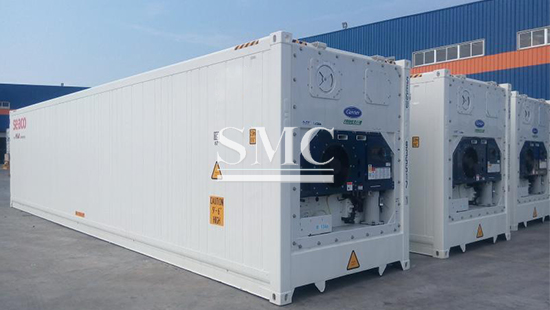
Refrigerated containers refer to containers with refrigeration or insulation functions, used for transporting frozen or low-temperature cargo, such as fish, meat, fresh fruits, and vegetables.
In addition, there are detachable refrigerated containers. Detachable refrigerated containers refer to containers where the refrigeration unit can be connected to or separated from the container body. In reality, the container body is simply a well-insulated box; during land transport, it is generally connected to the refrigeration unit; during sea transport, it is separated from the refrigeration unit. Cooling inside the container relies on the ship's refrigeration unit, connected to the refrigerated container via a cold air duct system. In container yards and terminals, if equipped with centralized refrigeration equipment and cold air duct systems, the detachable refrigerated container can also be separated from the refrigeration unit and use centralized cooling.
Bulk cargo containers are mainly used for transporting malt, grains, and granular chemicals. Their shape is similar to general cargo containers, with a door at one end and 2-3 loading ports on the top. Loading ports are available in both round and rectangular shapes. Below the door are two rectangular unloading ports. In addition to the watertight end doors, the loading ports on the top and the unloading ports on the end doors of bulk cargo containers are also highly watertight, effectively preventing rainwater intrusion. Bulk cargo containers can also be used to transport general cargo.
7) Ventilated Container
Ventilated containers are similar in appearance to general cargo containers, but differ in having 4-6 ventilation openings on the side or end walls. When ships sail through areas with significant temperature differences, ventilated containers prevent cargo spoilage due to condensation and moisture caused by temperature fluctuations inside the container. Ventilated containers are suitable for loading fruits, vegetables, food, and other goods that require ventilation and are prone to spoilage due to moisture. If the vents are closed, ventilated containers can be used as general cargo containers. Ventilation in ventilated containers generally relies on natural ventilation, and the container body typically has a double-layer structure for better ventilation and decondensation removal.
Tank containers are specifically designed for transporting oils (such as animal and vegetable oils), alcoholic beverages, liquid food products, and liquid chemicals. They can also transport alcohol and other liquid dangerous goods. Tank containers consist of a tank body and a frame. The dimensions of the frame conform to international standards, and the corner posts are equipped with international standard corner fittings, allowing for loading and unloading in the same manner as international standard containers.
9) Pen Container
Animal containers are containers used for transporting live poultry such as chickens, ducks, and geese, and live livestock such as cattle, horses, sheep, and pigs. The top of the container is covered with plywood, and the sides and ends have metal mesh windows for ventilation. Cleaning and drainage outlets are located at the bottom of the side walls for easy cleaning.
10) Car Container
A car container consists of a steel frame mounted on a simple base. It typically has end walls and side walls, and the bottom should be made of non-slip steel plates. Car containers are available in single-layer and double-layer configurations. Since the height of a typical car is 1.35–1.45 m, loading it into an 8 ft (2438 mm) high standard container only utilizes 3/5 of its capacity, making cars an uneconomical containerized cargo. To improve container utilization, double-layer car containers are available in two heights: 10.5 ft (3200 mm) and 12.75 ft (1.5 times the height of 8.5 ft). Therefore, car containers are generally not international standard containers.
11) Combination Container
A combination container, also known as a "mother-daughter container," is commonly called a G-tainer. Its structure is based on an independent chassis, with the top, side walls, and end walls capable of being disassembled and assembled. It can transport goods individually or be tightly packed within 20-ft and 40-ft containers as an auxiliary container. With the side panels removed, it resembles a pallet, hence the name "pallet container."
12) Garment Container
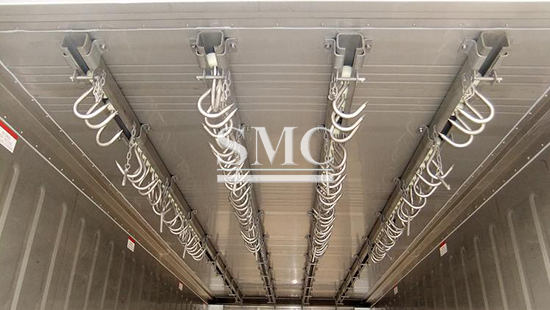
A garment container is a variation of a general cargo container. It has numerous crossbars on its inner side beams, each with several rope loops hanging from it. Garments are hung directly on these loops using hooks on hangers. This method of loading garments eliminates the need for packaging, saving significant amounts of packaging materials and costs, as well as packaging labor. The only difference between this type of container and a regular general cargo container is that the strength of the inner upper beams needs to be slightly reinforced. By retracting the rope loops on the crossbars, this type of container can be used as a regular general cargo container.
13) Container for Other Purposes
The application of containers is becoming increasingly widespread, not only for transporting goods but also for other purposes, such as "mobile power station containers," "mobile cabin containers," and "mobile office containers." The United States has developed a "field hospital" composed of several 20-foot containers, with dozens of beds, equipped with a pharmacy, laboratory, operating room, and nursing rooms.
For more information, please visit: https://www.shanghaimetal.com/Containers-20.html
For our full list of products that we offer check out our website here. Be sure to join the conversation in our LinkedIn group, Facebook, Twitter.
Try also our WeChat by scanning the QR code below.
Fever L.//SMC Editor