
- Company overview The heart of SMC Vision & Philsophy Partnership Certifications Company culture
- Our service Design and Engineering Maintenance and Service Examine Production Line Upgrade and Transformation Storage and Logistics Processing, Trading and Distributor
- Management Our history Global responsibility Info Center
- Procurement center Internship
- Metal Steel Products Stainless Steel Products Aluminum Products Copper Products Galvanized Steel and PPGI Special Alloy Building Material
- Containers ISO Standard Container Equipment Container Storage Container Tank Container Container Fittings Container Trailer Refrigerated/Reefer Container Offshore Container Container House
- Gas Cylinder & Fire Extinguisher Cryogenic Liquid Cylinder Oxygen Gas Cylinder Storage Tank CNG Gas Cylinder LPG Gas Cylinder Hydrogen Gas Cylinder Nitrogen Gas Cylinder Industry Gas Cylinder Fire Extinguisher
- Metal Machinery Motor Forming Machine Cutting Machine Processing Machine Bending Machine Block Machine Spare Parts Other Machinery
- Mechanical Products Conveyor Belt Miscellany Mooring Equipment Laser Equipment Bearing Marine Equipment Vehicle Industry Pressure Vessel
- Electrical System Transformer Production Line Lighting System Power Distribution Automation Electrical Cable Solar Power System Electric Protection System
- Project Plastic Pipes and Pipe Fittings Fiberglass Reinforced Plastic Pontoon System
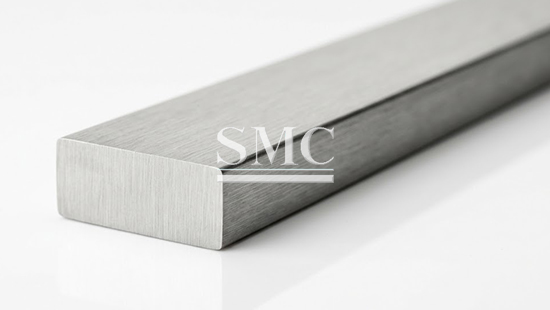
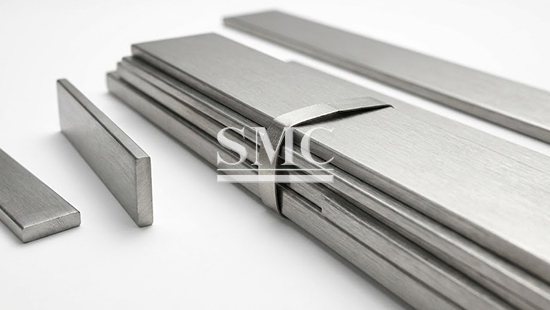
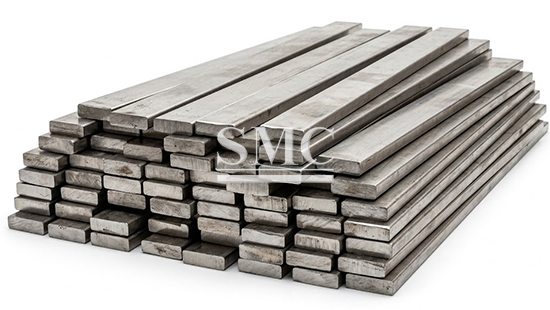
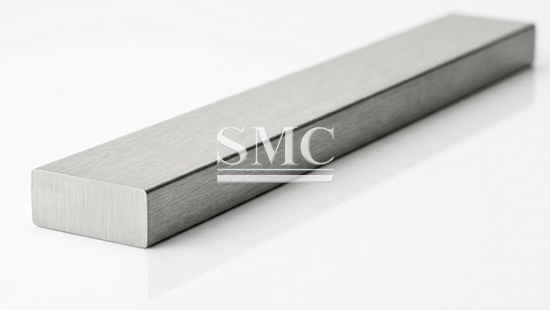
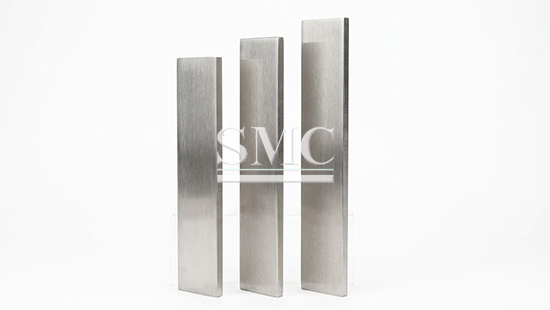
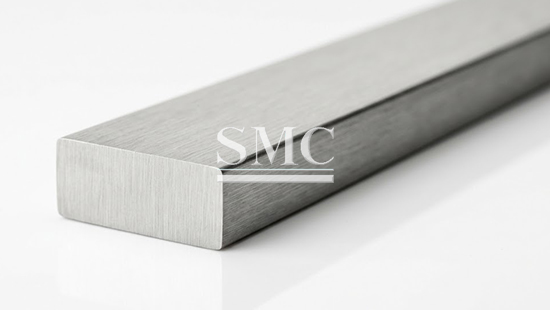
Stainless Steel Flat Bar


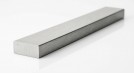
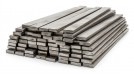
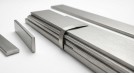
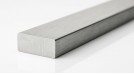
Grade: 301, 302, 303, 304, 304L, 310, 310S, 321, 316, 316L, 317, 317L, 329, 347, 409, 410, 416, 420, 430, 430F, 201, 202, 630, 631, 2205
Standard: GB, SUS, AISI, DIN
Size: 2*20~25*150mm
Delivery status: Hot Rolled, Pickled, Hot Forged, Bead Blasted, Peeled
Shanghai Metal Corporation is a leading stainless steel flat bar manufacturer and supplier.
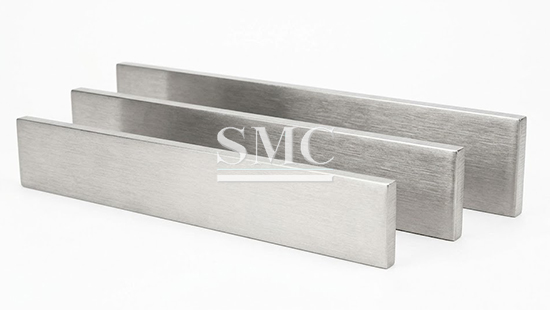
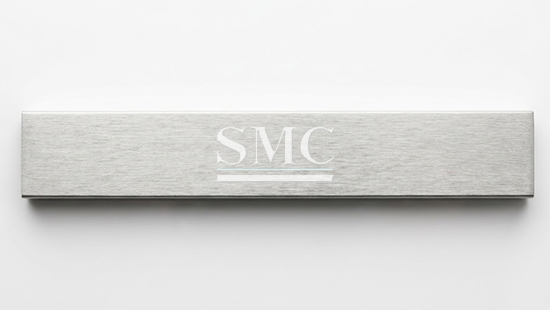
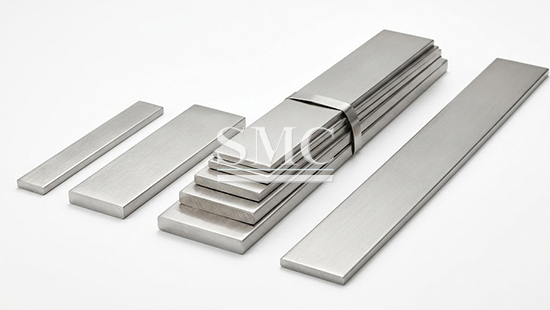
Stainless steel flat bar is a rectangular-section long product made from austenitic stainless steel grades including 304, 304L, 316, 316L, 321, and 201. It is available in hot-rolled pickled bead-blasted and cold-rolled polished conditions, with sizes ranging from 2×20 mm to 25×150 mm. The material offers resistance to corrosion and oxidation in humid, chemical, and high-temperature environments, with 304 grade containing 17.5–19.5% chromium and 8.0–10.5% nickel for balanced strength and workability, while 316 grade incorporates 2.0–3.0% molybdenum to withstand chlorides and marine exposure. Flat bar is commonly used as structural support, bracing, base plates, and connection components in construction and infrastructure projects; as frames, brackets, and machine parts in equipment manufacturing; as corrosion-resistant racking and vessel supports in chemical and petrochemical processing; and as sanitary structural material in food processing, brewing, and medical equipment where surface cleanliness and rust prevention are critical.
If you want to know more about our stainless steel products or stainless steel flat bar price please feel free to contact us, we will reply you within 24 hours.



1. Corrosion Resistance in Humid and Chloride Environments
304/304L resists moisture and general corrosion; 316/316L with 2–3% Mo resists chlorides and salt spray.
Customer value: Longer service life in marine, chemical, and outdoor applications, with lower maintenance and replacement costs.
2. Stable Load-Bearing Strength
Tensile strength ≥515 MPa, yield strength ≥205 MPa, elongation ≥40% for austenitic grades.
Customer value: Reliable structural support for bracing, base plates, frames, and equipment mounting.
3. Good Weldability and Formability
Low-carbon 304L/316L grades limit carbide precipitation, and the austenitic structure supports cutting, drilling, bending, and welding.
Customer value: Reduces cracking risk and fabrication rework during on-site or workshop processing.
4. Tight Dimensional Control
Hot-rolled and cold-drawn options provide uniform thickness, width, and straightness; cold-drawn grades hold tighter tolerances.
Customer value: Helps achieve accurate assembly, smooth welding, and less machining waste.
5. Multiple Surface Finish Options
Pickled, bead-blasted, polished, brushed, and mirror finishes are available.
Customer value: Matches appearance, cleanliness, and hygiene requirements for food, medical, and architectural uses.


1. Architectural Curtain Wall and Railing Structural Support
Usage Scenario: Curtain wall mullion connections, staircase railing supports, embedded parts, and steel structure stiffeners.
Recommended Specs/Structure: 304 hot-rolled pickled flat bar, equal-edge, 6×50 mm, 8×80 mm, 10×100 mm.
2. Food Processing Equipment Frames and Worktables
Usage Scenario: Food production line frames, conveyor belt supports, washing area worktables, and stainless steel countertop supports.
Recommended Specs/Structure: 304 or 316L cold-drawn polished flat bar, 4×40 mm, 5×50 mm, 6×60 mm.
3. Chemical Pipeline Supports and Tank Reinforcements
Usage Scenario: Chemical pipeline supports, reactor external brackets, storage tank stiffeners, and pump base connectors.
Recommended Specs/Structure: 316L hot-rolled pickled flat bar, 10×100 mm, 12×120 mm, 16×150 mm.
4. Marine and Offshore Walkway Supports
Usage Scenario: Ship deck railings, gangway supports, offshore platform walkway brackets, and seawater pipe fasteners.
Recommended Specs/Structure: 316L hot-rolled or cold-drawn flat bar, 8×60 mm, 10×80 mm, 12×100 mm.
5. Automation Equipment and Mold Base Plates
Usage Scenario: Equipment frames, guide rail supports, fixture locating parts, stamping die base plates, and valve connectors.
Recommended Specs/Structure: 304 cold-drawn polished flat bar, 3×30 mm, 5×40 mm, 8×60 mm.
|
Parameter Category |
Parameter |
Typical Specification / Value |
Unit |
Remarks |
|
Basic Information |
Product Name |
Stainless Steel Flat Bar |
|
Rectangular-section |
|
Basic Information |
Product Shape |
Flat rectangular cross-section |
|
|
|
Basic Information |
Common Grades |
304 / 304L / 316 / 316L / 321 / 310S |
|
Other grades available upon request |
|
Dimensions |
Thickness Range |
3–60 (common range) |
mm |
Subject to actual mill production capability |
|
Dimensions |
Width Range |
10–300 (common range) |
mm |
Subject to actual mill production capability |
|
Dimensions |
Standard Length |
Usually 2–6 meters; cut-to-length available |
m |
Common lengths: 3 m and 6 m |
|
Dimensions |
Cross-Section |
Flat / rounded edge / customized section |
|
According to drawing or applicable standard |
|
Dimensions |
Surface Condition |
Black / pickled / cold drawn / polished / mirror / brushed |
|
|
|
Dimensions |
Surface Finish |
No.1 / 2B / No.4 / HL / BA / 8K |
|
Finish depends on processing method |
|
Material Properties |
Density |
7.93 for 304; 7.98 for 316/316L |
g/cm³ |
Typical values |
|
Material Properties |
Melting Range |
Approximately 1400–1450 |
°C |
Varies slightly by grade |

Standard Packaging
Stainless steel flat bars are bundled with steel strapping at 500–800 mm intervals. Each bundle contains 20–50 pieces depending on bar size. Bundles are wrapped with PE film for moisture protection, and both ends are secured with plastic caps. Bundles are then placed on fumigated wooden pallets or packed into wooden crates for export. Standard bundle weight: 1–3 tons. Maximum length: 6,000 mm. Bundle width and height vary by bar dimensions. Custom packaging is available upon request. Each bundle is marked with heat number, grade, size, and quantity for traceability.
Shipping
We support FCL and LCL sea freight, air freight, and express delivery depending on order quantity and destination. Available trade terms: EXW, FOB, CIF, CFR, DDP. Other terms may be available upon request. Shipping costs are calculated based on total volume, gross weight, destination port, and selected transport method. For FCL: a 20GP container loads approximately 20–25 tons; a 40GP container loads approximately 25–28 tons. For LCL, minimum chargeable volume applies.
Lead Time
Samples: 3–7 working days
Standard orders: 15–25 working days
Customized orders: 25–40 working days
Shipping Documents
Commercial Invoice, Packing List, Bill of Lading, Certificate of Origin, Mill Test Certificate (EN 10204 3.1), and other documents as required.


Q1: What information do you need from me to recommend the right stainless steel flat bar?
Please provide the following:
Application: end use and service environment (indoor, outdoor, marine, chemical, food processing, etc.)
Grade: 304, 304L, 316, 316L, 321, or 201 — or describe the corrosion conditions and we will recommend
Dimensions: thickness, width, and length (or cut-to-length requirements)
Quantity: total weight or number of pieces
Standard: ASTM A276, ASTM A479, EN 10088-3, JIS G4303, or project-specific requirement
Surface condition: hot-rolled pickled, cold-drawn polished, brushed, or mirror finish
Destination port: for shipping quotation
Q2: What quality documents come with the order?
Every shipment includes a Mill Test Certificate (MTC) per EN 10204 3.1, with heat-specific chemical composition and mechanical property results. We can also provide:
Certificate of Origin
Commercial Invoice and Packing List
Bill of Lading
Third-party inspection reports (SGS, BV, Intertek) upon request
EN 10204 3.2 certificate with independent witnessing if required for pressure equipment or cryogenic applications
Q3: What is the MOQ and production lead time?
MOQ is 1 ton for standard sizes. For custom sizes or small-batch prototypes, MOQ can be negotiated down to 100–500 kg depending on the specification. Lead time:
Samples: 3–7 working days
Standard orders: 15–25 working days
Customized orders (cut-to-length, chamfering, drilling): 25–40 working days
Q4: How do I choose between 304/304L and 316/316L flat bar?
Choose based on the service environment:
304/304L: general indoor and outdoor exposure, food processing equipment, architectural trim, and machinery components. Good resistance to atmospheric corrosion and most mild chemical environments.
316/316L: marine and offshore structures, chemical processing, pharmaceutical equipment, and any application exposed to chlorides, salt spray, or aggressive acids. The 2–3% molybdenum content delivers significantly better pitting and crevice corrosion resistance than 304. 316L also has lower carbon (≤0.03%) to prevent sensitization in welded joints.
If your application involves coastal atmosphere, de-icing salts, or chemical contact, specify 316/316L. For standard structural or food-grade use without chloride exposure, 304/304L is sufficient and more cost-effective.
Q5: What welding procedure should be used for stainless steel flat bar?
Use TIG for root pass and MIG for fill and cap, or TIG throughout for critical joints. Key parameters:
Filler metal: ER308L for 304/304L, ER316L for 316/316L — always match the low-carbon grade to the base metal
Interpass temperature: ≤150°C (recommended below 100°C)
Shielding gas: high-purity argon ≥99.99%; back purge with argon at 5–15 L/min for 316 grades
Heat input: 10–25 kJ/cm; single-pass weld width should not exceed 4× filler wire diameter
Pre-weld cleaning: remove oil, paint, and oxide from 20 mm on both sides of the joint; use stainless-only grinding wheels and brushes to avoid iron contamination
Post-weld: natural air cooling only — no forced cooling. Normally no heat treatment is required
For 316L, back purging is essential to maintain corrosion resistance in the weld root.
Q6: Will 316L flat bar resist pitting in a marine or chloride environment?
Yes, within its design limits. 316L contains 2.0–3.0% molybdenum, which raises the Pitting Resistance Equivalent Number (PREN) to approximately 25, compared to 19 for 304. This makes 316L suitable for:
Ship deck railings and gangway supports
Offshore platform walkway brackets
Seawater pipe fasteners and splash-zone components
Limitations: 316L is not recommended for continuous immersion in warm seawater or high-chloride process streams above 60°C. For those conditions, consider duplex stainless steel or higher-alloy grades. For atmospheric salt spray and intermittent splash exposure, 316L performs reliably with minimal maintenance.



here
for
price
